


Best Time to Fish Northern Pike in Manitoba: A Month-by-Month Guide
Updated: Aug 25

Key Takeaways
June is the best month for a trophy northern pike in northern Manitoba. Post-spawn fish sit shallow, visible and aggressive, and the average size is the highest it will be all season.
July is the best all-around month. Pike hold along developing weed edges while lake trout, walleye and arctic grayling are all in play — the easiest week to complete a Canadian Grand Slam.
August is the structure month. Warm water pushes big pike out to deep weed lines and main-lake points. Harder fishing, but the most stable weather and almost no bugs.
September brings the fall feed. Cooling water moves pike back shallow to hunt whitefish, and there's almost nobody else on the water.
Manitoba's Master Angler threshold for northern pike is 41 inches. On our water, that's common in any month of the season.
If you're picking dates for a Manitoba pike trip, here's the short answer: June for the biggest fish, July for the most variety, August for the most comfortable week, September for the fall feed.
There isn't a bad month up here. But the fishing is genuinely different from one month to the next, and that difference matters more on a fly-in lake this far north than it does on water you can drive to. Below is what actually happens at Munroe Lake through the season — where the fish go, what they'll eat, and which month fits the trip you're trying to have.
Why the Northern Manitoba Pike Season Is So Short — And So Good
Munroe Lake sits roughly 650 miles north of Winnipeg, right where the boreal forest starts giving way to tundra. Ice doesn't leave until late May or the first days of June, and it starts forming again in October. The entire open-water year is compressed into about four months.
That compression is the whole story. Spring, summer and fall all happen fast, so patterns that unfold across eight months on a southern lake stack up in a quarter of the time here. It also means the fish have short growing seasons and long lives — cold, clear Canadian Shield water, no road access, one lodge on the lake, low guest numbers and catch-and-release fishing. Pike get old here, and old pike get long.

Month-by-Month Pike Fishing at a Glance
Month | Where the pike are | Average size | Best for |
June | Shallow bays, creek mouths, dark-bottom flats in 2–6 feet | Highest of the season | Trophy hunters, sight casting, fly anglers |
July | Developing weed edges, points, the first drop-off | Strong | Numbers, topwater, the Canadian Grand Slam |
August | Deep weed lines, main-lake structure, cool inflows | Good, but earned | Stable weather, no bugs, structure anglers |
September | Back shallow on dying weeds, chasing whitefish | High | The fall feed, solitude, northern lights |
June: The Best Month for a Trophy Pike
Ice usually clears Munroe in late May or the first week of June, and pike spawn almost immediately in the shallow, dark-bottomed bays that warm first. Right after that, the big females stay put — sitting in two to six feet of water, recovering, warming up and feeding hard.
Two things make June special. The weeds haven't grown in yet, and the water is cold and glass-clear. You can see the fish. Casting to a visible forty-five-inch pike laid up on a sand flat and watching her turn on the bait is the single best thing that happens here all year, and June is when it happens.
It's also when average size peaks. The biggest fish in the lake are as shallow and as catchable as they will be at any point in the season.
What works: big spoons, spinnerbaits and large soft plastics on weedless hooks. Fly anglers should be throwing big streamers on an 8 to 10 weight. Slow your retrieve down early in the month — the water is still cold and fish won't chase far.
The trade-off: June weather is the least predictable of the season, and in a late year the ice can hang on. Bugs show up toward the end of the month.
Book June if: your number one goal is a Master Angler fish, or you want to sight-fish.
July: The Best All-Around Month
Water warms through July, weed beds come up in the bays, and the lake settles into summer. The pike spread out — smaller, aggressive fish move into the salad, while the bigger ones set up on the outside edges, on points and along the first drop-off into deeper water.
This is also the month everything else turns on. Lake trout are still reachable before they go deep, arctic grayling are working the current and rivers, and walleye are in the mix. If you want to catch pike, lake trout, walleye and grayling in the same week — the Canadian Grand Slam — July is your best shot at it.
What works: this is the best topwater window of the year. Big walk-the-dog baits and bucktails over and along weed edges, especially in the back half of the month. Work the outside edge, not the middle of the weeds, if you're after size.
The trade-off: bugs peak in the first half of July. Bring a head net and don't skip the repellent.
Book July if: it's your first fly-in trip, or your group wants different things out of the week.
August: The Structure Month
August brings the warmest water of the season. Weeds are at full height, the lake is at its most spread out, and the biggest pike push out to deep weed edges, main-lake points and rock structure — often relating to cooler water near creek mouths and the deeper basin edges.
Nobody will tell you August is the easy month for size, and we won't either. You work structure, you fish the edges properly, and you fish early and late. Midday can go quiet unless there's wind and cloud to break up the light.
What you get in return is the best week of weather on the calendar, bugs that have mostly packed it in, and long comfortable days. Shore lunch in August is hard to beat.
What works: big soft plastics and jerkbaits worked along deep weed lines, spoons off the break, and trolling to cover water and find the edge fish are using.
Book August if: you like reading structure, or you want the most comfortable week of the season.
September: The Fall Feed
Water cools fast this far north, and pike know what's coming. They move back onto the outside edges of dying weed beds and into the shallows to hunt whitefish and ciscoes ahead of freeze-up.
Fall is a big-bait month. Fish that spent August picking at things start eating full meals, and the average size climbs again. There's also almost nobody out here — the tundra is turning, caribou are moving through, and the northern lights are back after the midnight-sun weeks.
The trade-off: it's our hunting season, which means if you want a fish, you need to be up here on a caribou or moose hunt.
What Counts as a Trophy Pike in Manitoba?
Manitoba's Master Angler program, run by Travel Manitoba since 1960, sets the northern pike threshold at 41 inches. Anything at or over that length qualifies for a certificate and a spot in the record book.
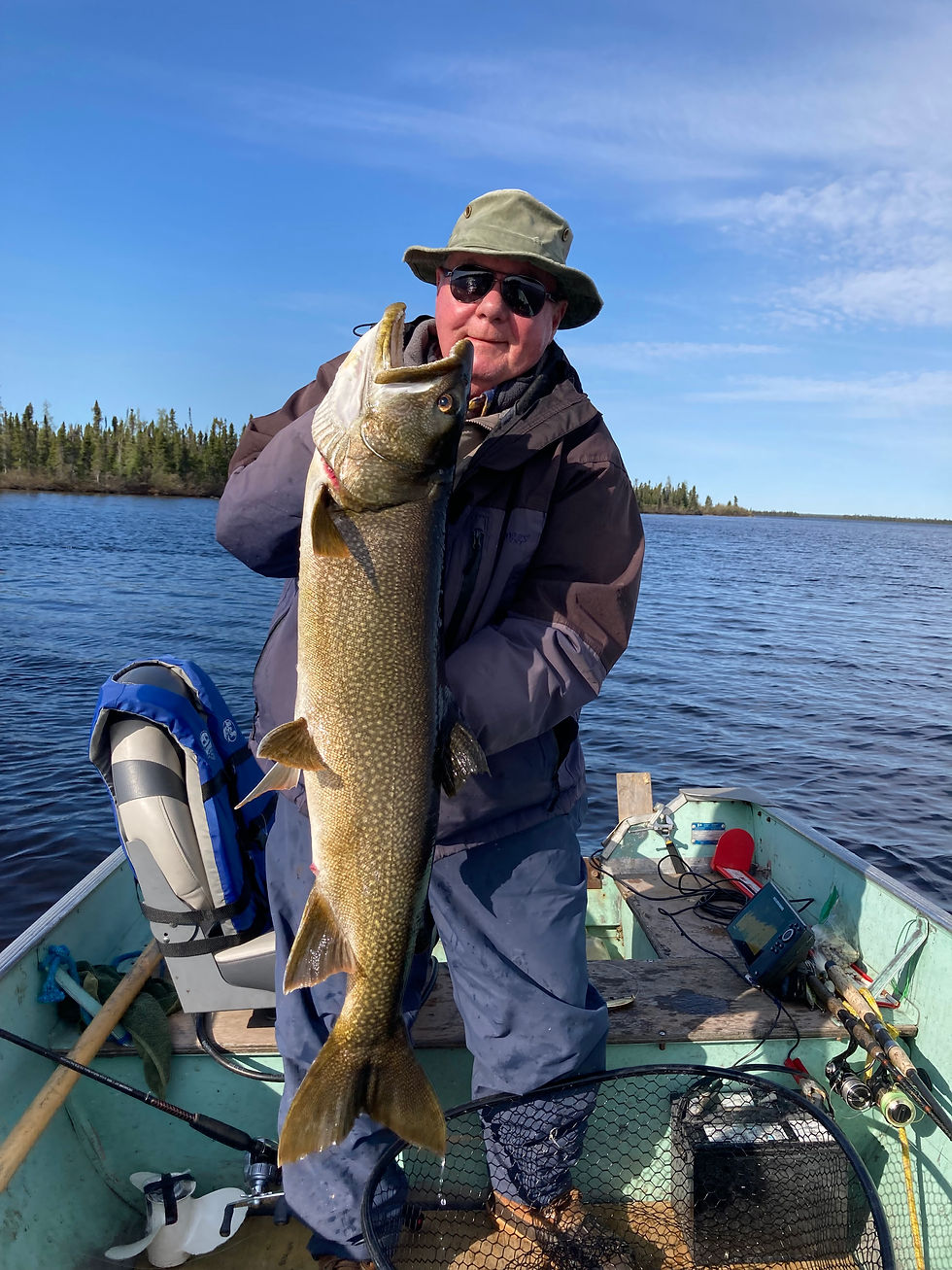
For context on our water: mid-forty-inch pike come to the boat regularly through the season, and we've had guests land fish over 50 inches. We're a catch-and-release lodge — barbless hooks, jaw spreaders and long-nose pliers for clean releases, a quick photo, and back she goes. That's the reason the fishing here still looks the way it does.
Which Month Should You Actually Book?
Biggest single fish → June
Most fish in a day → July
Canadian Grand Slam in one week → July
Fly fishing and sight casting → June
Fewest bugs → August
Most reliable weather → August
Quietest lake → August
First fly-in trip ever → July
Regulations, Licences and Handling
Munroe Lake falls in Manitoba's Northeast Division. Barbless hooks are required, live baitfish aren't allowed, and portions of the division are managed as High Quality Management Waters with release requirements on larger fish. Your Manitoba angling licence is included in our packages, and our guides handle the rest.
Shore lunch is northern pike or lake trout under 25 inches. Everything bigger goes back in the water. Full details are on our fishing regulations guide.
Manitoba Pike Fishing FAQ
What is the best month to fish northern pike in Manitoba?
June is the best month for trophy northern pike in northern Manitoba. Post-spawn fish hold in shallow bays before the weeds grow in, which makes the largest fish in the lake both visible and catchable. July is the strongest all-around month if you want numbers and multiple species.
When is pike season in Manitoba?
Angling in Manitoba's Northeast Division is generally open year round, subject to the regulations in the provincial Anglers' Guide. Fly-in lodges are limited by ice — the open-water season at Munroe Lake Lodge runs from June through September.
What size northern pike is considered a trophy in Manitoba?
Forty-one inches. That's the minimum length for a northern pike to qualify for Manitoba's Master Angler program, which Travel Manitoba has run since 1960.
Do pike bite better in spring or fall?
Both are excellent for different reasons. Spring — June, this far north — puts the biggest fish in shallow water where you can see them, and produces the highest average size of the year. Fall pushes pike into a heavy pre-winter feed on whitefish and ciscoes, which favours large baits and rewards patience.
When is the best time to catch a 50-inch pike?
June gives you the best odds, because the largest fish in the system are concentrated in shallow water and actively feeding after the spawn. Fifty-inch pike are rare anywhere, and no month guarantees one.
When do northern pike spawn in northern Manitoba?
Right after ice-out, which on a lake this far north usually means late May into early June. Pike spawn in shallow, dark-bottomed bays and creek mouths that warm before the rest of the lake.
What is the best month for topwater pike fishing?
July. Water temperatures peak, weed beds are established, and pike sitting on those edges will come up for a surface bait — the most exciting way to catch them.
What is the best month to catch the Canadian Grand Slam?
July. Northern pike, lake trout, walleye and arctic grayling are all accessible in the same week, which is what makes a single-lake Grand Slam realistic at Munroe.
When are the bugs worst in northern Manitoba?
Late June through the first half of July. August and September are largely bug-free. A head net and repellent handle it either way.
Do you need a guide to fish for pike in Manitoba?
Not by law for anglers, but on a remote fly-in fishing lake it's how you find fish fast. Our packages include guiding, boats and motors, tackle and your Manitoba angling licence.
Pick Your Week
Every month up here has something the others don't. If you tell us what you're after — a single giant fish, a Grand Slam, a comfortable week with your group — we'll tell you honestly which weeks fit and which are already spoken for.
Get in touch and we'll walk you through what's open. Our northern pike fishing page covers gear and technique in detail, our fly-in fishing page covers how a week works, and if you'd rather have a lake to yourself, take a look at our outpost camps at Brownstone.


Comments