


What to Expect on Your First Manitoba Caribou Hunt

Updated: Aug 25
Key Takeaways
A Manitoba caribou hunt puts you on the migration route of the Qamanirjuaq herd — one of the largest barren-ground caribou herds left in North America.
Success depends heavily on the migration, which is why a guided hunt with an outfitter who knows the ground matters more here than in almost any other big-game hunt.
The barren-ground caribou season runs from the last week of August into early October — peak rut, when bulls carry their heaviest antlers.
Manitoba doesn't run a public caribou draw for non-residents. Tags are allocated to a small number of licensed outfitters, and non-residents are required by law to hunt with one — so booking early is the difference between hunting this season and waiting for the next.
Expect cool, fast-changing tundra weather, long glassing sessions, and some of the best incidental lake trout, pike, and Arctic grayling fishing you'll find anywhere.
If you've never hunted caribou before, the first thing to understand is that a Manitoba caribou hunt doesn't feel like other big-game hunts. There's no still-hunting through timber, no long solo sit waiting on a single trail. This is about reading open country, understanding a migration that moves by the thousands, and being in the right place when it arrives. It's one of the last true spot-and-stalk hunts left on the continent, and it draws hunters who've already put moose, elk, and whitetail on the wall and are looking for something that still feels genuinely wild.
Here's what to expect when you book your first caribou hunt with us at Munroe Lake Lodge — the migration and the ground you'll hunt, when to book, what a week looks like, and what to pack.
What Makes a Manitoba Caribou Hunt Different
Our caribou hunting grounds sit about 8 km (5 miles) south of the Manitoba/Nunavut border, on the shores of Farnie Lake — right on the annual migration route of the Qamanirjuaq herd, one of the largest barren-ground caribou herds on the planet. Almost no hunting pressure has ever touched this ground. From camp, our guides work the shorelines, islands, and high points by boat and on foot, glassing miles of open country for bulls moving through on their way south.
You're hunting the seam where the northern forest gives way to open tundra — barren lands broken by sparse stands of trees, lakes, rivers, and ponds. That mix is exactly what makes our spot-and-stalk approach work: guides glass from boats and high ground, read the herd's movement, and put you in position for a stalk.
That migration is the whole story of a barren-ground caribou hunt. Unlike a resident species with a home range, caribou funnel through in waves that can shift by days or even weeks depending on weather, snow, and hunting pressure farther north. Bulls tend to move less in bad weather and cover ground quickly in good weather, so no two weeks — and no two days — look exactly alike. Reading those patterns is exactly what a good guide is for.
Guided vs. DIY: Why the Migration (and the Law) Calls the Shots

Anyone researching a caribou hunt up here runs into the same question fast: can you do this on your own, or do you need an outfitter? For non-residents, the answer is settled before you even factor in the migration. Under Manitoba regulations, non-resident and foreign caribou hunters must book through a licensed Manitoba outfitter and hunt with a licensed guide, with no more than three hunters per guide. A DIY non-resident caribou hunt simply isn't an option here.
Beyond the legal requirement, there's a practical one. Reading the migration knowing which lakes the herd is favouring this week, which ridgelines to glass, when to move camp versus wait it out — is the product of guides who've watched this ground for years, not a single season of scouting. Going with an outfitter who's tracked this migration season after season is the single biggest thing you can do to stack the odds in your favour. At our camp we run one guide for every two hunters — tighter than the legal maximum — so you're never far from someone who knows the country.
When to Book Your Manitoba Caribou Hunt
For non-residents availability comes down to how many spots your outfitter holds — not a lottery you enter and hope to win. Combined with how few tags exist province-wide, it's why our caribou seasons fill up well ahead of time, and why recent seasons have sold out. If you're serious about hunting caribou in Manitoba, the smart move is booking well ahead of the season you want rather than waiting until spring to start calling around. You can always get in touch with us to check current availability and dates.
What a Week at Caribou Camp Looks Like

A typical trip starts in Thompson, Manitoba. From there you'll fly to our Main Lodge on Munroe Lake aboard a wheeled Cessna Caravan, landing on our 3,300-foot airstrip, then transfer to a floatplane for the short hop out to Caribou Camp on Farnie Lake. (For the full route from Winnipeg north, see our travel details.) On arrival day we get you sighted in at around 100 yards, handle the paperwork, and — weather permitting — you're usually hunting before noon.
Days run early. Breakfast is on by seven, and once lunches are packed you're out with your guide, by boat or on foot, working shorelines and high ground for bulls. When you're not glassing or stalking, there's genuinely good hunting and fishing to fill the downtime: ptarmigan season overlaps with caribou, wolf can be taken opportunistically if you're carrying an open big-game tag, and the lake trout, northern pike, and Arctic grayling fishing around camp is as good as anything we offer our summer fly-in fishing guests — trophy lake trout and pike have been caught within minutes of camp. If you'd rather not choose between big-game species, we also run caribou-and-moose combo hunts during the overlapping rut, though those spots are very limited.
Evenings are simple and good: a hot supper — often featuring caribou or fresh lake trout — and camp conversation, usually under a sky full of northern lights, before an early night. Your guides handle the work of processing and tagging your meat, rack, and cape in the butchering tent so your trip home is uneventful. This isn't a wall-tent, freeze-dried-meals operation — you'll have beds, hot water, Starlink wifi, and three cooked meals a day made with local fish and game — but it is genuinely remote. You're hunting country that sees almost no other pressure, which is exactly the point.
What to Pack for a Barren-Ground Caribou Hunt
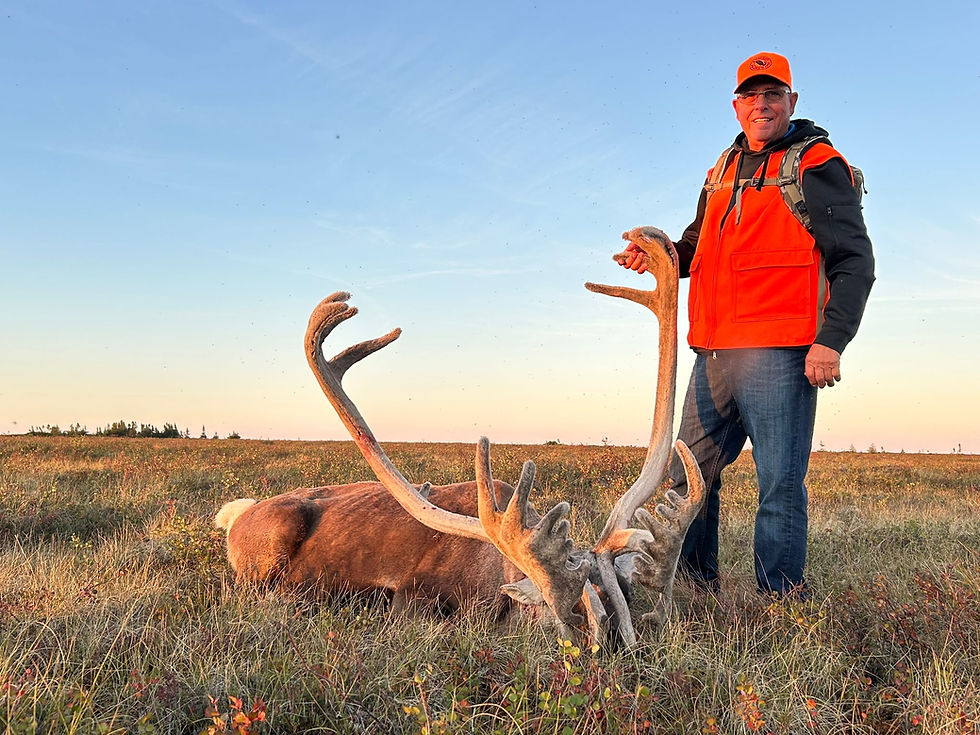
Tundra weather changes fast, so layering matters more than any single piece of gear. In our area, daytime highs average around 10°C (50°F) and can drop well below that, so plan for wind and cold rain even in September. A good waterproof outer shell, warm mid-layers, solid waterproof boots for getting in and out of boats, and gloves or mitts for early mornings on the water will carry you a long way. Manitoba also requires hunters to wear blaze orange, so pack a high-visibility orange vest and cap.
Bring your passport and ID for the border crossing into Canada, and pack light enough to make the floatplane weight limits — we'll help you plan that. We walk every hunter through a full hunting gear list before their trip, so you'll head north knowing exactly what to bring.
Licenses, Tags, and Manitoba Hunting Regulations
Because caribou tags in Manitoba are allocated to licensed outfitters rather than drawn, we handle the licensing process directly with hunters who book with us — there's no separate application for you to navigate on your own. Your Manitoba fishing licence and bird licence are included in your hunt, along with wolf and ptarmigan hunting; the only additional costs are trophy fees ($1,000 per successful animal harvested) and applicable taxes. If you want the finer details before you book, our Manitoba hunting guide walks through them.
What we ask in return is that hunters respect the fair-chase nature of this hunt and the communities around it. A portion of every caribou harvested here goes to local First Nations communities — a small way of giving back to the land this hunt depends on.
Manitoba Caribou Hunt FAQ
Do I need a guide to hunt caribou in Manitoba?
Yes. For non-residents and foreign hunters, Manitoba law requires that you book through a licensed Manitoba outfitter and hunt with a licensed guide (no more than three hunters per guide) — so a caribou hunt here is always a guided hunt. It's also the right way to do it: success hinges on reading a migration that shifts with weather and pressure farther north, and knowing which lakes and ridgelines the herd is favouring in a given week is the product of guides who've watched this ground for years.
How do I get a caribou tag in Manitoba?
Unlike many big-game hunts, Manitoba doesn't run a caribou draw for non-residents. The province issues a limited number of non-resident caribou tags each year and allocates them to a small group of licensed outfitters, so availability comes down to how many spots your outfitter holds rather than a lottery. When you book a caribou hunt with us, we handle the licensing paperwork directly — there's no separate application for you to chase down.
How physically demanding is a caribou hunt at Munroe Lake?
This is one of the more accessible big-game hunts out there. Rather than long backcountry pack-ins, our guides run hunters by boat along the shorelines and to high points, glassing miles of country for bulls moving through. There's walking and stalking once you're on caribou, but the boat-based approach makes this a realistic hunt for a wide range of ages and fitness levels. Tell us about your group and we'll set expectations honestly.
Can you hunt caribou with a rifle or a bow?
Barren-ground caribou can be taken with either. Rifle is the most common choice, but the spot-and-stalk and calling style we use suits archery hunters well too — especially during the rut, when bulls respond to calls. Reach out before you book and we'll talk through regulations and what will work best for your setup.
What else can you hunt or fish during your stay?
Plenty. Ptarmigan season overlaps with caribou, wolf can be taken opportunistically if you're carrying an open big-game tag, and the lake trout, Arctic grayling, and northern pike fishing around camp rivals anything we offer our summer fishing guests. Most hunters fill their downtime between glassing sessions with a rod in hand. Want both big-game species? Ask about our caribou-and-moose combo hunts.
What's included in a caribou hunt at Munroe Lake Lodge?
Our hunts are run all-inclusive from Thompson, Manitoba: return flights to camp, comfortable accommodations with warm beds, hot water, and Starlink wifi, three cooked meals a day using local fish and game, guiding at one guide per two hunters, and boat, motor, and fuel. Your Manitoba fishing and bird licences are included, plus wolf and ptarmigan hunting. Trophy fees ($1,000 per successful animal) and applicable taxes are extra. Get in touch for current pricing and available dates.
Ready to Plan Your First Manitoba Caribou Hunt?
A Manitoba caribou hunt is a genuinely different kind of big-game experience — long glasses across open country, a migration that rewards patience and local knowledge, and a bull caribou at full rut that few hunters ever get to see up close. If you've had this on your list, this is the season to stop researching and start planning. Get in touch with us, and we'll help you figure out the right dates and answer whatever's still on your mind before you book. You can also see how it all comes together in Jim's 2023 caribou hunt with us.


Comments